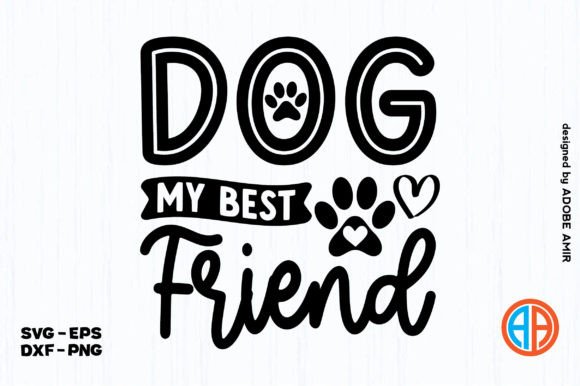
Dog My Best Friend SVG Design
A Designer’s First Look: Warm, Simple, and Ready for Real Stitching
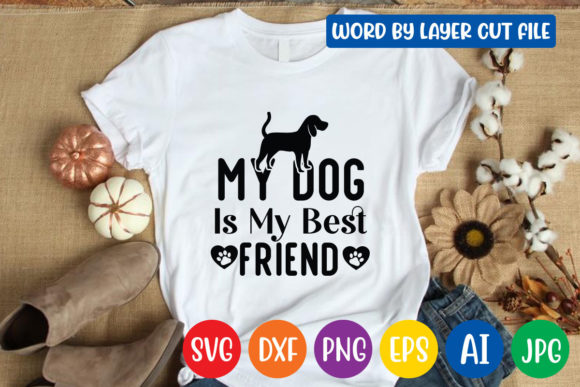
When I opened Dog My Best Friend SVG Design, I didn’t see another generic pet motif—I saw a quiet confidence in its simplicity. The silhouette of a relaxed dog sitting beside a clean, friendly phrase feels grounded, not cutesy. No exaggerated eyes or cartoonish poses—just honest shape, balanced negative space, and gentle curves that suggest approachability. As a designer who’s stitched hundreds of custom pieces for clients and small shops, I immediately thought: this isn’t just decorative. It’s *relatable*. That matters when you’re embroidering something meant to live on a baby onesie, a linen tea towel, or a boutique apron.
How It Holds Up on Real Embroidery Projects
Last week, I prepped a batch of organic cotton tote bags for a local pet rescue’s fundraiser. I chose Dog My Best Friend SVG Design as the centerpiece—not because it was flashy, but because it stitched cleanly at 3.5" wide with minimal underlay and no distortion on medium-weight canvas. The phrase “My Best Friend” uses open, legible lettering—no thin serifs or tight kerning that vanish under satin stitch. On sweatshirts? It reads clearly even with fleece backing and light stabilizer. On baby onesies? I resized it down to 2.25", and the dog outline retained soft definition—no jagged edges or skipped stitches. That’s rare in basic SVG-to-embroidery conversions.
Where it shines most is in context-driven projects: personalized gifts (think monogrammed pillow covers with the dog facing the name), holiday embroidery (stitched in red-and-khaki thread on burlap stockings), or small shop merchandise like embroidered patches for vet clinics or dog-walking services. As a craft business owner, I appreciate how easily it integrates into a cohesive brand story—especially paired with neutral thread palettes and natural fabrics.
Where to Use It Thoughtfully—Not Just Everywhere
This isn’t a one-size-fits-all machine embroidery design. Its charm lies in restraint—but that means it needs thoughtful placement. Avoid using Dog My Best Friend SVG Design on highly textured fabrics like heavy terry cloth or bouclé without testing first: the dog’s outline can blur if fill stitch density isn’t adjusted. On stretchy fabric (like ribbed knit tees), use cutaway stabilizer and reduce top tension slightly—otherwise, the phrase may pucker near the tail curve. Dark fabric demands high-contrast thread; I recommend testing black-on-navy or charcoal-on-cream to ensure legibility before committing to a full run.
It’s also not ideal for curved surfaces like structured caps unless resized below 2". The phrase spacing tightens unpredictably under hoop pressure there. And while it works beautifully as an applique design on denim jackets, avoid layering it over thick seams or pockets—the dog’s seated posture loses clarity if stitched over uneven terrain.
What It Adds to Your Finished Product—Beyond Aesthetics
Customers don’t buy embroidery—they buy meaning. Dog My Best Friend SVG Design lands that emotional note without overreaching. When stitched on a linen kitchen towel, it reads as warm and intentional—not mass-produced. On a custom embroidered patch sewn onto a child’s backpack, it feels personal and enduring. That builds trust. Buyers notice when a design breathes, when letters aren’t cramped, when the dog’s ear doesn’t vanish into a dense fill stitch. That attention signals professionalism—and raises perceived value, especially for Etsy sellers pricing handmade product at $35–$65.
For digital product sellers, this SVG file functions well as part of a themed bundle (e.g., “Pet Lover Essentials” with coordinating paw prints and bone icons). But remember: as a Graphics asset, it’s a starting point—not a finished embroidery file. You’ll need to digitize it properly for commercial embroidery, adjusting stitch types (satin for outlines, fill for body areas, running stitch for subtle detail) based on your project goals.
Practical Notes Every Embroidery Designer Should Check
- Always test first: Run Dog My Best Friend SVG Design on scrap fabric matching your final project’s weight and stretch.
- Review stitch density: If digitizing yourself, keep fill stitch density under 0.4mm for breathable fabrics like cotton voile or baby knits.
- Confirm hoop size: At standard 4"x4" scale, it fits comfortably—but verify your machine’s max width before resizing up for tote bag front panels.
- Inspect small details: Zoom in on the dog’s nose and paw lines. If they’re too thin (<0.8mm), they’ll disappear in satin stitch—adjust manually or add a tiny running stitch accent.
- Mock it both ways: Preview in black-and-white and grayscale to gauge contrast on light vs. dark fabric backgrounds.
- Stabilizer choice matters: Use tear-away for stable wovens, cutaway for knits or lightweight linens—especially for items that will be washed frequently.
- Licensing check: Since this is listed under Crafts and distributed as a digital embroidery file, confirm whether commercial use is permitted before selling finished products or reselling digitized versions.
Final Thought: A Quiet Workhorse, Not a Showstopper
Dog My Best Friend SVG Design won’t dominate a craft fair table with glitter or neon—it earns attention by fitting *just right*. It’s the kind of embroidery file you reach for when you want sincerity over spectacle: for a nurse’s scrub cap, a foster parent’s gratitude gift, or a small shop’s seasonal apron line. It respects the fabric, the stitcher, and the person receiving the finished product. In a market flooded with overdesigned graphics, that kind of quiet intentionality is the mark of a truly useful design asset.